Pest Control Service Hallandale Beach delivers direct extermination programs across coastal Broward County to eradicate nesting pests instead of masking active infestations. High relative humidity above 75 percent and dense multi-family infrastructure allow subterranean termites, German cockroaches, and roof rats to spread rapidly between shared utility chases.
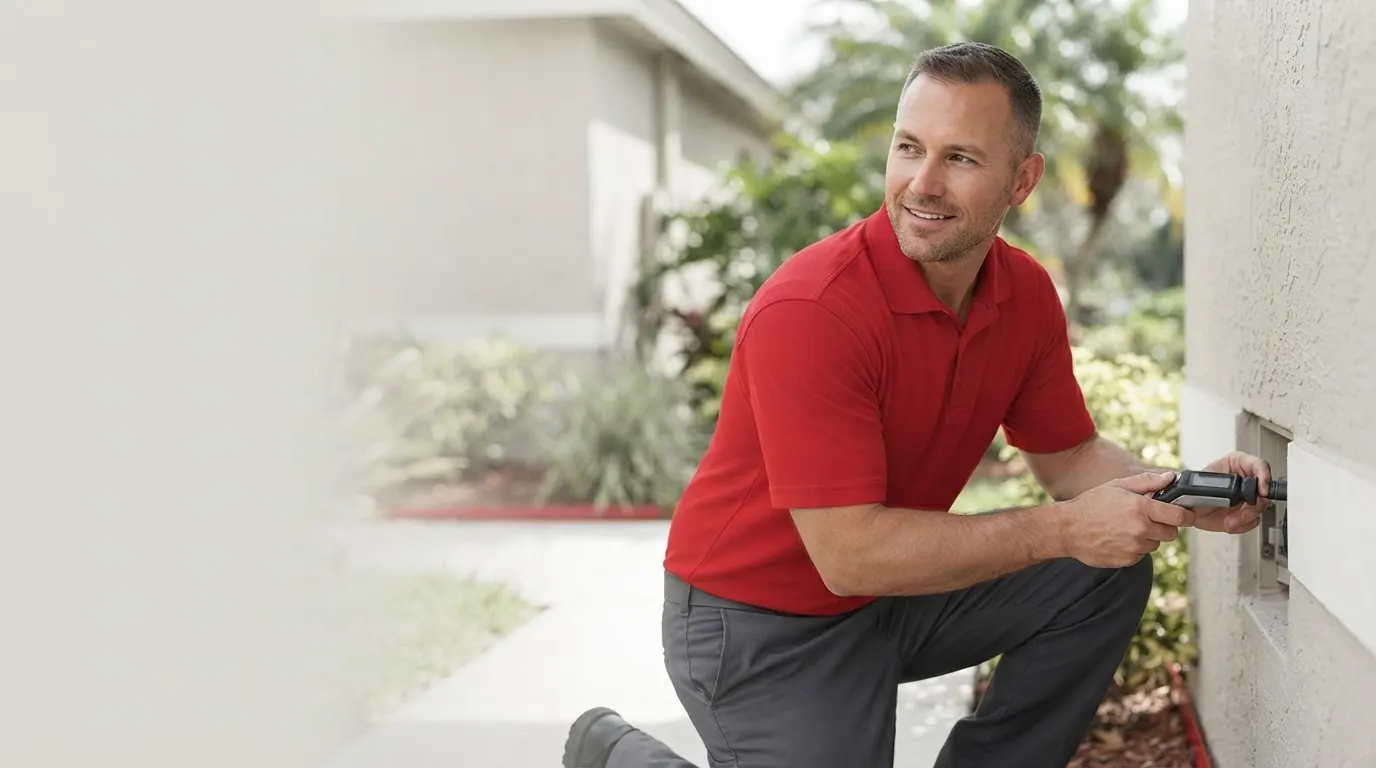
Pest Control Service in Hallandale Beach is a professional extermination and perimeter defense system that halts invasive insect and rodent colonies inside residential structures, high-rise condominiums, and commercial facilities.
Every service reflects the same meticulous attention to detail, whether it's a single job or a larger pest control service project across Hallandale Beach.
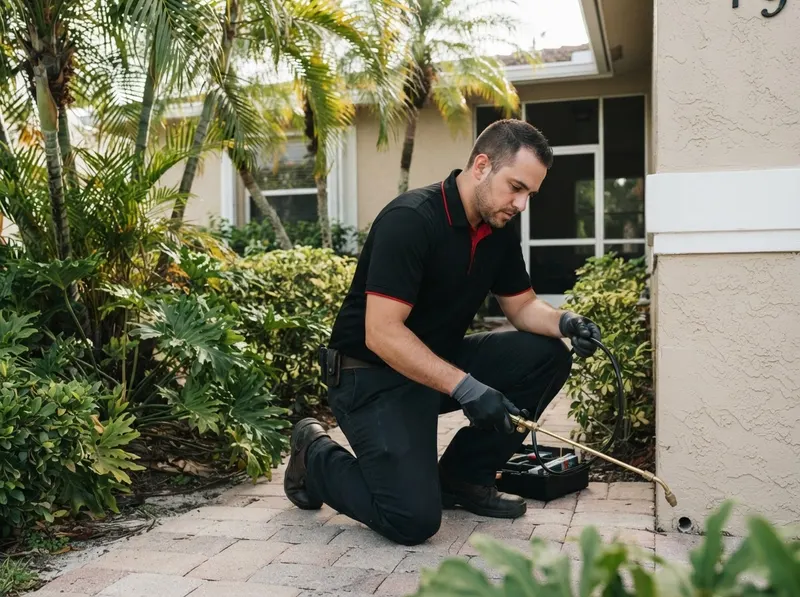
General pest control establishes continuous chemical and physical protection around single-family residences, townhomes, and low-rise apartments. Treatments target common crawling pests including American roaches, silverfish, house crickets, and non-wood-destroying beetles. Service includes clearing spider webs and exterior mud dauber tubes up to twelve feet, followed by micro-encapsulated barrier spraying three feet up the exterior wall and three feet out along surrounding soil. Technicians inspect door sweeps, window weep holes, and exterior plumbing escutcheons, applying moisture-resistant insecticidal dust into exterior voids. Regular quarterly maintenance intervals preserve residual efficacy against coastal sun degradation and high rainwater dilution, keeping perimeters sealed against opportunistic ground-dwelling insects.
Get a quote →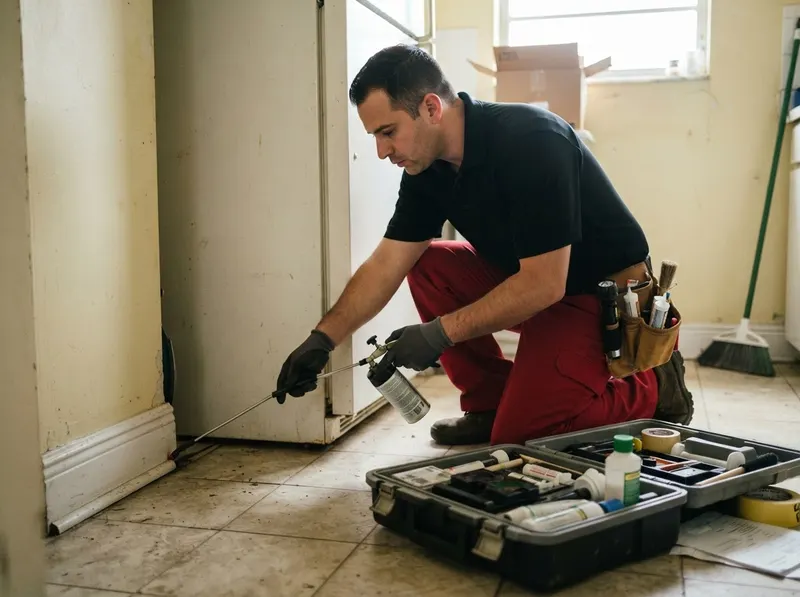
Roach extermination eliminates resilient interior populations of Blattella germanica (German roaches) as well as intrusive outdoor species like Periplaneta americana (American roaches). Technicians avoid broad-spectrum broadcast sprays that scatter nesting roaches deeper into wall cavities, deploying concentrated bait matrices containing targeted active ingredients paired with insect growth regulators (IGRs). Treatments target electrical junction boxes, cabinet hinges, compressor motor wells in refrigerators, and undersides of stone countertops. Follow-up treatments at fourteen-day intervals interrupt the egg reproduction cycle by neutralizing newly hatched nymphs before sexual maturity, ensuring complete colony collapse without leaving toxic airborne residues on food-preparation surfaces.
Get a quote →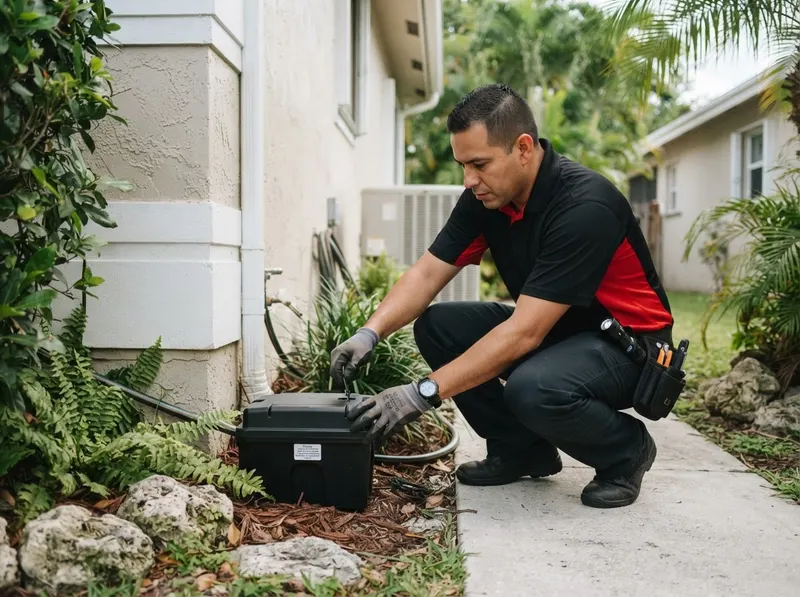
Rodent control terminates active roof rat (Rattus rattus) and house mouse infestations while structurally barricading entry points against future ingress. Roof rats thrive in the dense canopies of royal palms and sea grape trees, jumping directly onto fascia boards, tile roofs, and soffit vents. Technicians install tamper-resistant external bait stations secured to concrete footings along building perimeters and run mechanical trapping grids inside attic voids and drop ceilings. Structural exclusion work seals entry apertures larger than one-quarter inch using heavy-gauge welded wire mesh, metal flashing, and polyfoam compounds that gnawing rodents cannot penetrate, eliminating the biological odors that attract secondary rodent populations.
Get a quote →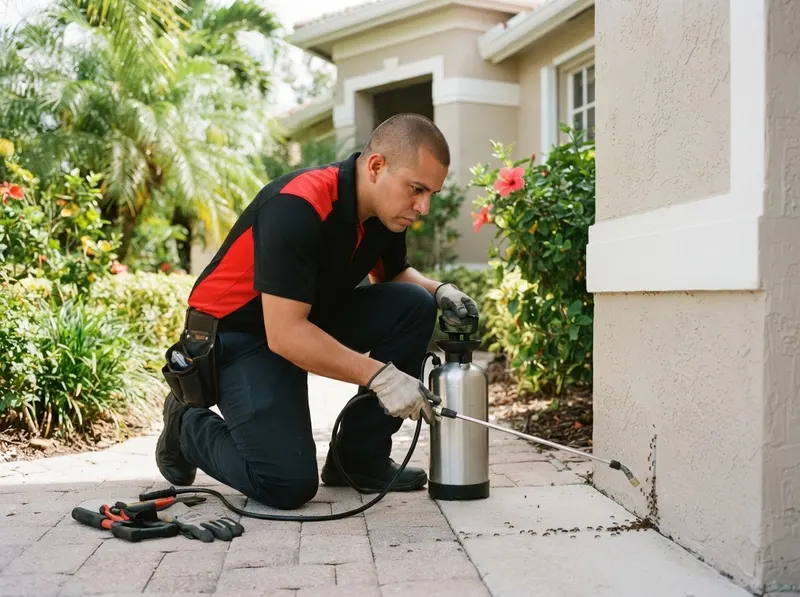
Ant control protocols address aggressive subtropical colonies including ghost ants (Tapinoma melanocephalum), big-headed ants, white-footed ants, and imported fire ants. Because indoor spraying of contact repellents causes budding, whereby single colonies split into multiple satellite nests, treatment relies exclusively on slow-acting non-repellent liquid transfers and high-attractant granular baits. Worker ants consume the matrix and carry it directly to subsurface queens, eradicating entire nesting complexes within seven to fourteen days. Exterior landscape borders, pavement expansions, and tree trunks are treated to cut off structural trailing routes before foraging worker trails reach interior baseboards and kitchen counters.
Get a quote →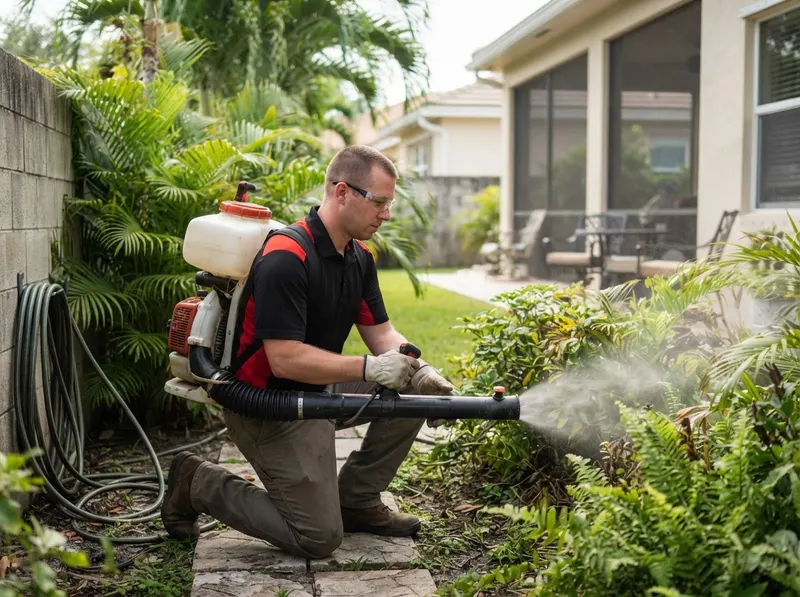
Mosquito reduction utilizes ultra-low volume (ULV) backpack misting equipment to treat resting habitats in dense exterior foliage, ornamental hedges, and under eaves where Aedes aegypti and Culex mosquitoes harbor during daytime heat. Technicians treat non-draining standing water sources, catch basins, and bromeliad plants with microbial larvicides containing Bacillus thuringiensis israelensis (Bti), preventing mosquito pupae from emerging as biting adults. Monthly applications from May through November suppress active vector populations, reducing pest annoyance across outdoor patios, pool decks, and open-air hospitality areas while breaking the mosquito reproductive cycle in standing rainwater reservoirs.
Get a quote →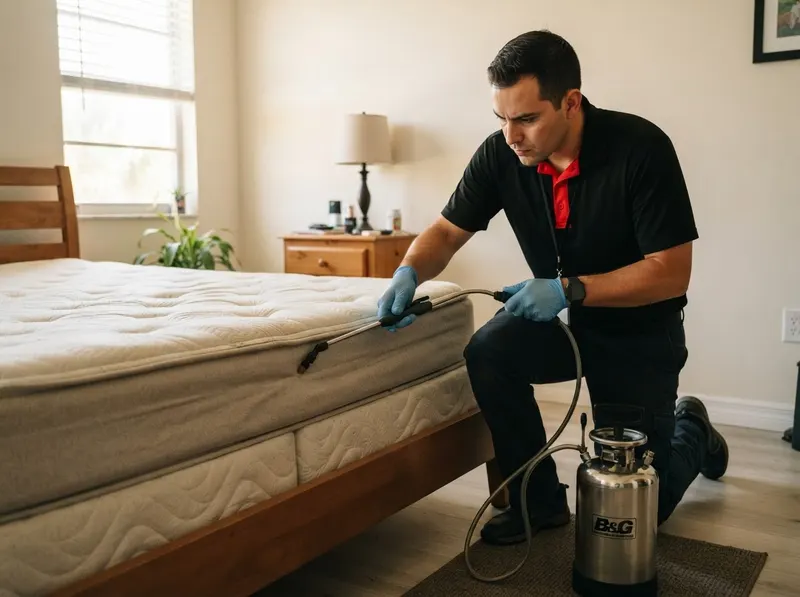
Bed bug remediation clears Cimex lectularius populations from mattresses, headboards, baseboards, electrical wall plates, and deep structural crevices. The process pairs localized high-temperature steam extraction (surpassing the 122-degree Fahrenheit lethal thermal threshold for insects and eggs) with dual-action chemical applications featuring residual active ingredients and bio-dusts. Structural electrical outlets are treated with desiccant dusts that strip the protective waxy outer coating of hiding bed bugs, leading to rapid dehydration. A mandatory thirty-day follow-up inspection guarantees that dormant eggs and secondary nymph emergence are completely neutralized, preventing recurring infestations in hospitality properties and private suites.
Get a quote →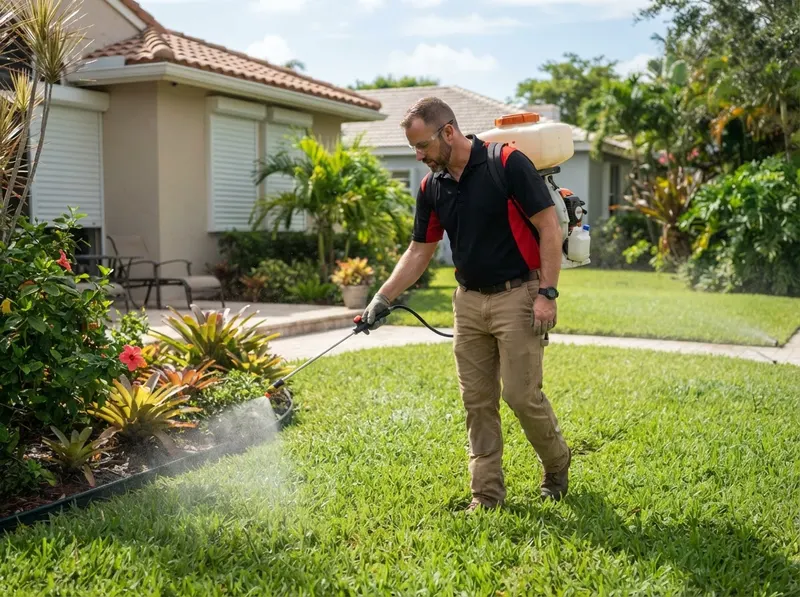
Lawn pest spraying targets destructive turfgrass insects that destroy South Florida St. Augustine and Zoysia lawns, focusing on southern chinch bugs (Blissus insularis), sod webworms, and mole crickets. Specialized liquid applicators saturate the thatch layer where chinch bugs pierce plant nodes to extract sap, which otherwise leaves dry, yellowing circular dead patches across sunny lawn sectors. Treatments also eliminate stinging ground pests, including imported fire ant mounds, while delivering root-zone protection that withstands high daily rainfall and supplemental irrigation schedules common to Broward County residential properties.
Get a quote →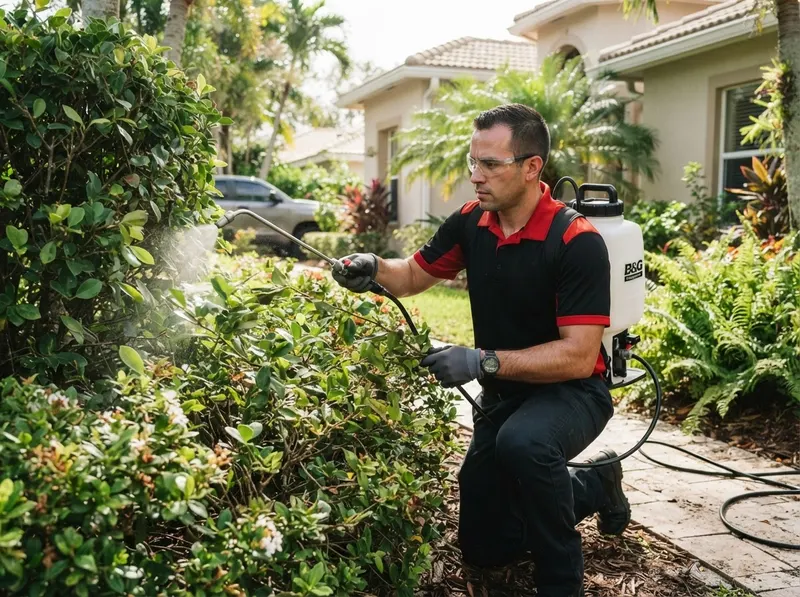
Ornamental tree and shrub care defends landscape investments against destructive foliar parasites such as rugose spiraling whiteflies, ficus whiteflies, croton scale, and aphids. Infestations coat ornamental foliage, patio pavers, and pool screens in black sooty mold that feeds on secreted honeydew. Treatments combine root-zone systemic soil drenches that circulate through internal vascular tissue with horticultural foliar contact sprays. This dual delivery method provides six months of sap-feeding insect control without burning sensitive tropical plant varieties or requiring repeated weekly surface chemical sprays on delicate landscape shrubs.
Get a quote →You get a firm, itemized quote for your pest control service before any work begins, no surprises, no pressure.
Careful prep, tidy work, and a full cleanup when we are done. We treat your home and belongings like our own.
The same trusted, background-checked team from the first call to the final check.
Selecting appropriate pest defense depends entirely on property architecture, immediate pest activity, and structural exposure across Hallandale Beach micro-environments. If a property faces an acute interior infestation of German cockroaches or bed bugs, choose an intensive chemical extraction and cleanout; if the structure shows zero indoor activity but borders moist vegetation or coastal water features, select a recurring perimeter barrier defense. The trade-off centers on upfront disruption versus maintenance continuity: an intensive indoor knockdown requires tenant prep, furniture repositioning, vacuuming, and targeted void applications, whereas exterior barrier maintenance requires no indoor preparation but cannot resolve an already-established interior nesting colony.
For multi-family residences along the South Ocean Drive corridor, single-unit exterior spraying fails because pests migrate horizontally through shared plumbing conduits, central HVAC chases, and drywall voids; these properties require integrated mechanical exclusion and interior baiting to stop re-infestation. Single-family homes in Golden Isles or Chula Vista require continuous exterior soil and perimeter vegetation management because sandy soil and constant irrigation accelerate the breakdown of exterior residual barriers. If subterranean termites are detected during spring swarms, a localized spot spray will fail; property owners must choose between a continuous non-repellent liquid trench in surrounding sand or an in-ground baiting array installed every ten to fifteen feet around the slab footprint.
The trade-off between liquid treatments and bait systems involves immediate chemical death zones in the soil versus long-term colony elimination through active ingredient sharing, with bait systems requiring ongoing monitoring inspections twice per year to track bait consumption.
Every project gets a firm, written price after a free on-site visit. Ranges below for orientation.
Tell us about your pest control service job and we'll send a clear, written quote, usually the same day. Or just call and talk to a real Hallandale Beach pro.
(239) 695-8601
Hallandale Beach rests on a porous limestone substrate surrounded by the Atlantic Ocean, the Intracoastal Waterway, and extensive residential canals, keeping relative humidity consistently elevated above 75 percent year-round. In waterfront communities like Golden Isles and Three Islands, elevated water tables push subterranean pests directly upward into structural foundation slabs, while constant marine breezes deposit fine salt film that rapidly degrades cheap, generic surface insecticides applied by off-the-shelf applicators. Properties bordering major traffic corridors like North Federal Highway, Pembroke Road, and Hallandale Beach Boulevard experience severe multi-family pest migration, where shared wall infrastructure and utility conduits allow German cockroaches and phorid flies to traverse entire building wings within days. Historic properties near the Curci House and recreational zones surrounding Joseph Scavo Park, South City Beach Park, and BF James Park & Pool contend with aggressive roof rat populations that thrive in mature cabbage palms, coconut palms, and sea grape clusters before nesting in residential attic insulation. Structural pest management in this coastal corridor requires heavy-duty micro-encapsulated formulations, non-repellent transfer chemistry, and continuous structural exclusion capable of withstanding tropical downpours and King Tide ground saturation.
Free estimates for Hallandale Beach & the surrounding area.
 Red Rooster Pest Control